Update 1 – Distress beacon and QOL preview
In this second and final preview post for the Materials Update, I want to cover some of the other polish and tweaks you’ll get to play with in Adaptory’s first major Early Access update, coming out tomorrow!!
Distress beacon (spoiler alert)
In Update 1, we’ve changed the launching requirements of the distress beacon to make a little bit more sense. You gain access to the distress beacon after sending the signal from your transmitter.
Instead of requiring water and hydrogen to launch, the beacon now requires oxygen and a brand new element: rocket fuel!
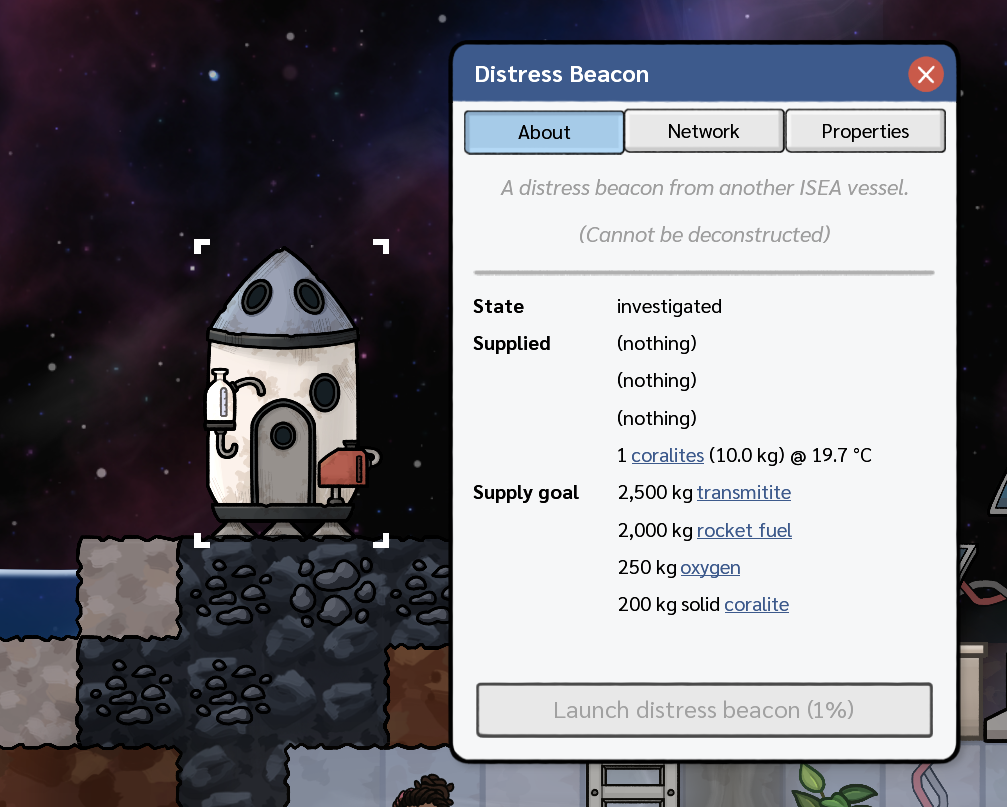
Rocket fuel is produced at the new liquid refinery building by combining crude oil and oxygen. Crude oil is another new element in Update 1, which can either be found naturally deep underground from springs, or it can be produced at a gas refinery through combining coal and steam – giving you plenty of options on how to tackle this challenge!
I’ve also added a new random world event into this update: the shock wave. This event causes a wave of gas – hydrogen, oxygen, or carbon dioxide – to wash over the unblocked space exposure tiles at the top of the world.
Windows and grates
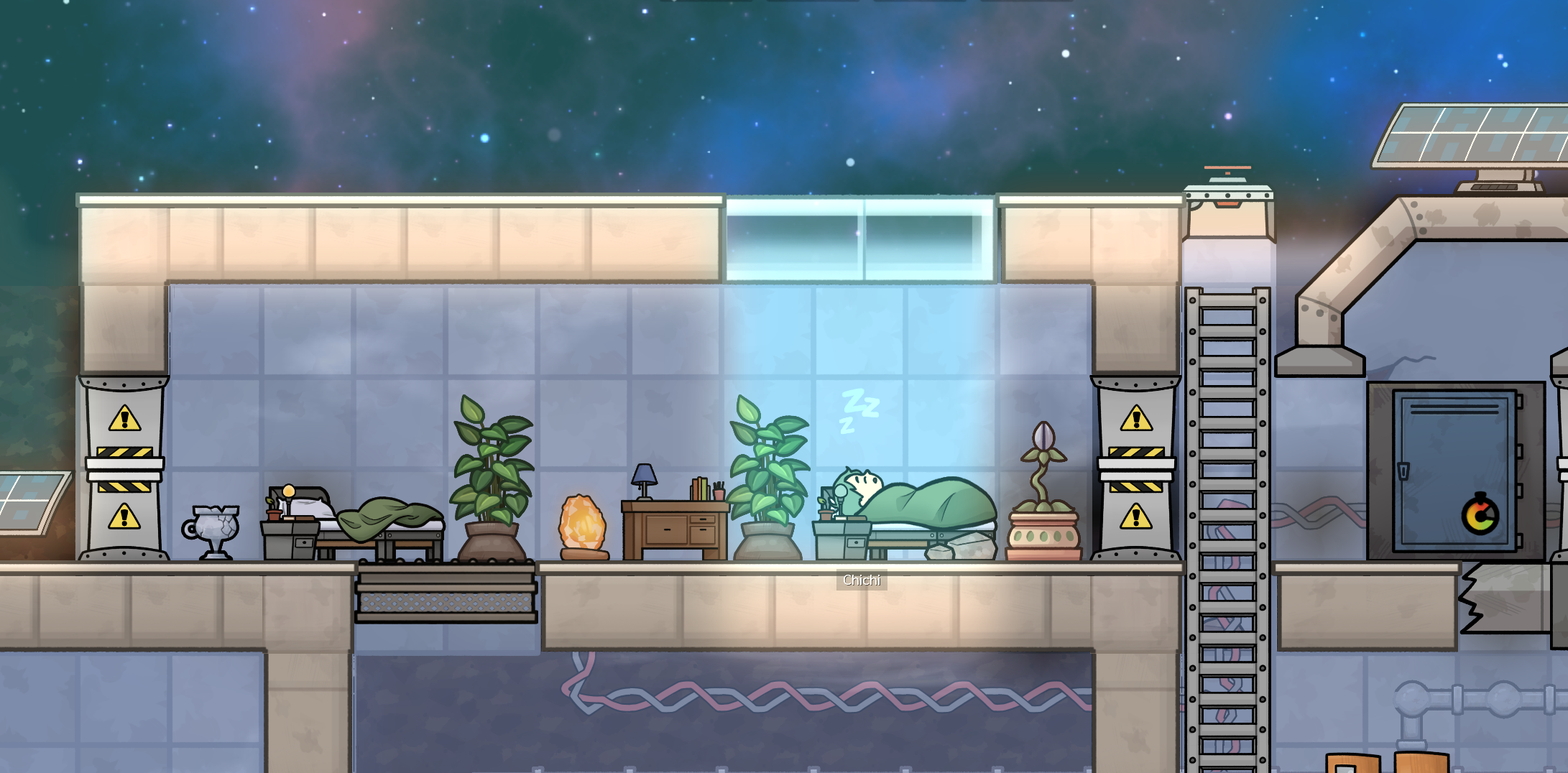
More options for your base design, unlockable through the research tree!
-
Grates are solid tiles that provide foundation for your explorers and other buildings, but allow gases and liquids to pass through. This can help with the flow of resources throughout your base (especially while we work on Update 2’s element simulations, which I’m hoping will fix the “sticky gas” problem).
-
Windows are solid tiles that also provide foundation, but allow light and aurora to pass through, while blocking gases and liquids. Your explorers can finally see what’s going on outside! Windows are made with the new glass element, which you can get by melting sand and salt together in a glass furnace.
Liquid disintegration
You can finally clean up all those puddles of water from any steam cavern incidents!
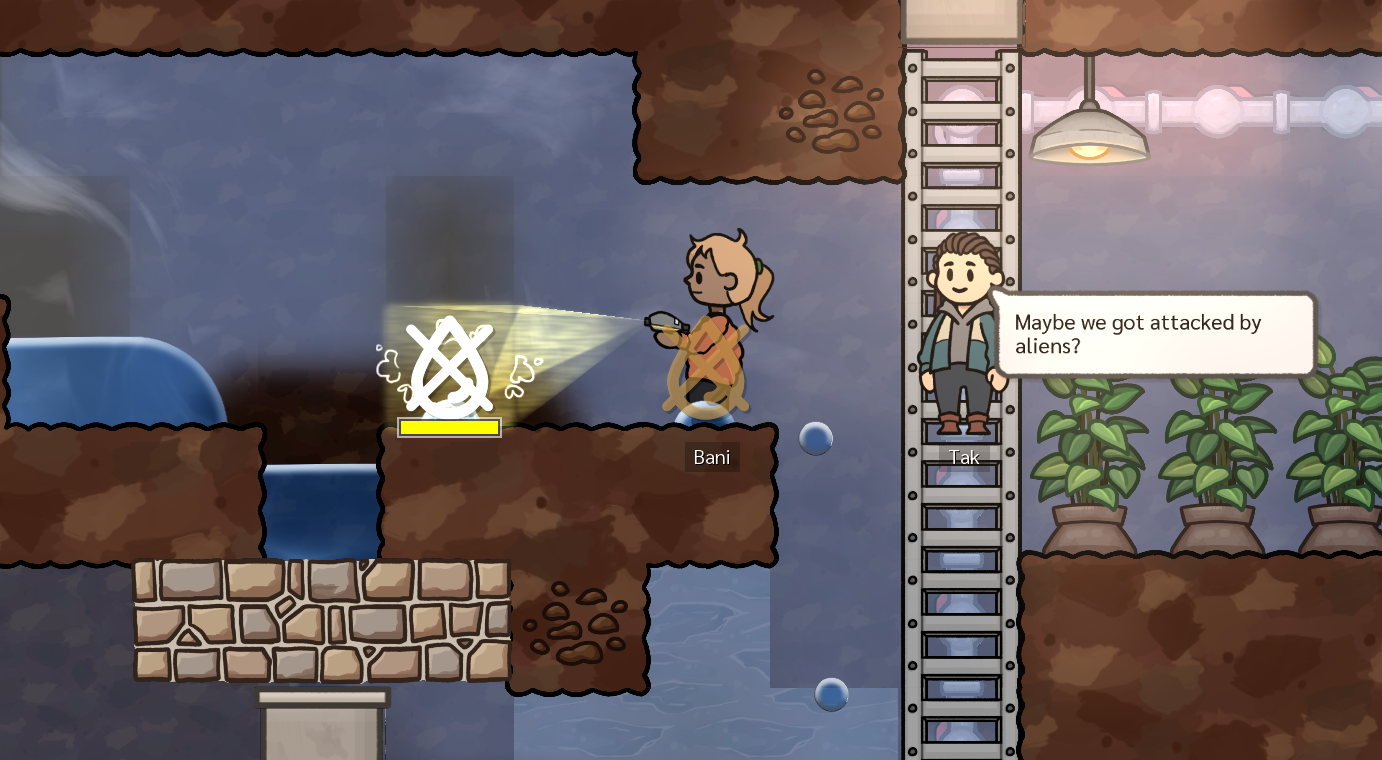
The new liquid disintegration world action gives you the option to permanently delete small amounts of liquids (less than 100kg per cell) in the world. An explorer has to come and actively use their multilaser to do this, and it’s also locked behind the new “liquid disintegration” node in the research tree so that it’s not overwhelming to new players.
Liquid disintegration is intended to be temporary, until I’ve added in more buildings, mechanics, and art in future updates to deal with small amounts of liquids – but at least now there’s a way to clean up some of these puddles.
Heads-up explorer display
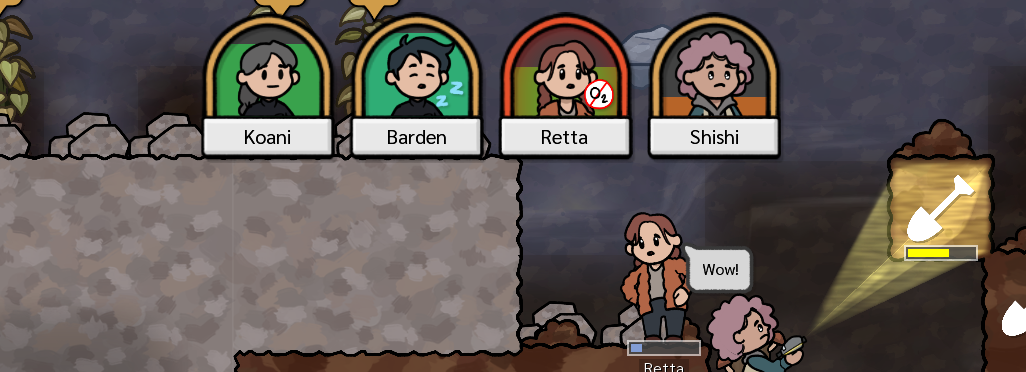
The top explorer selection bar has been polished in this update. Now along with their mood, the game will also show an icon if the explorer is busy doing something (sleeping, eating, writing in their diary, etc.) – and more importantly, will glow red if an explorer is dangerously low on oxygen.
Balance tweaks, QOL and other stuff
World generation has been updated: pockets of gas can now be generated in world generation; four new elements can now appear naturally (marble, iron, salt, and salt water); natural springs can now create salt water or crude oil; and oddberries have been moved much deeper underground (since they’re quite confusing for new players). I strongly recommend starting a fresh new save to have the most fun.
I’ve also managed to add a couple of quality of life features that have been bugging me for a while:
- When on a supported overlay layer (like the liquid, gas, or power overlays), context-specific errands (build, deconstruct, cancel) for that layer are now rendered on top of everything else – making them easier to see
- I’ve added low priority as another explorer prioritisation option; explorers will do errands marked as low priority last
- Build errands that are accessible, but are missing resources, are now rendered in a different colour, and are marked as “missing resources” in the selected errand panel
- The resource counter now has icons for each element and item type
- And plenty of other tweaks and polish
I’ve also been tweaking a lot of Adaptory’s balance to work better at each difficulty level; relaxed should be much easier, and difficult should be much more challenging. Thank you very much to everyone on Discord who’s been helping to test the balance! Game balance is never finished though, so I do really want to hear your feedback from all of these changes, especially at the different difficulty levels. I want Adaptory to be challenging but fun for a wide range of players.
And it’s out tomorrow!
The full patch notes for The Materials Update is more than eight pages long, with more unrevealed secrets too, so these two preview posts have only covered the highlights – but the game is feeling really good. I cannot wait for you to play the updated game tomorrow!
If you’re planning to stream your first playthrough, please let me know! Jevon will be floating around YouTube and Twitch all day and would love to say hi :D